Working principle of photoelectric liquid level sensor
author: GBeelee
2023-11-10
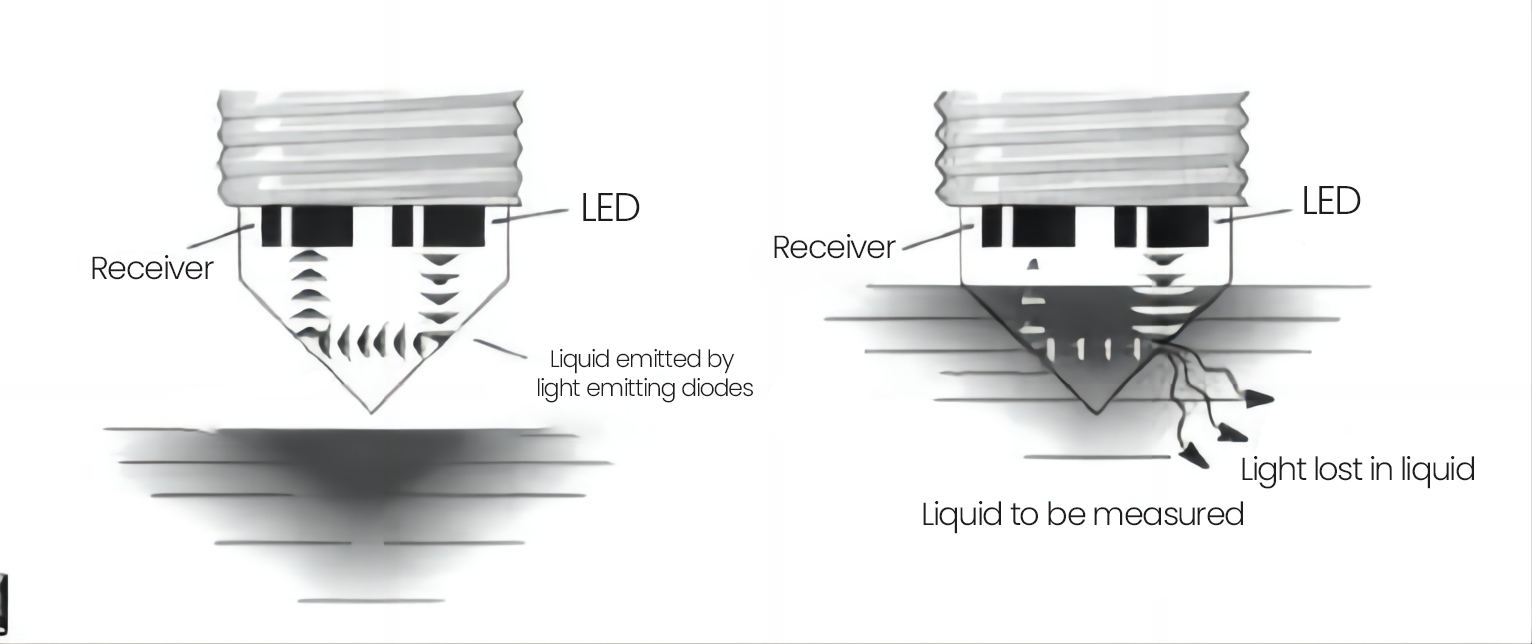
The photoelectric liquid level sensor uses the principle of reflection and refraction of light at the interface of two different media. It is a new type of contact point liquid level measurement and control device. Single point detection is possible, and TTL compatible digital level signal output is available.
- Concept: Contact point liquid level measurement and control device
- Principle: Light is reflected and refracted at the interface of two media
- Features: Accurate liquid level detection and high repeatability
- Advantages: small impact on the measured medium and other characteristics

working principle:
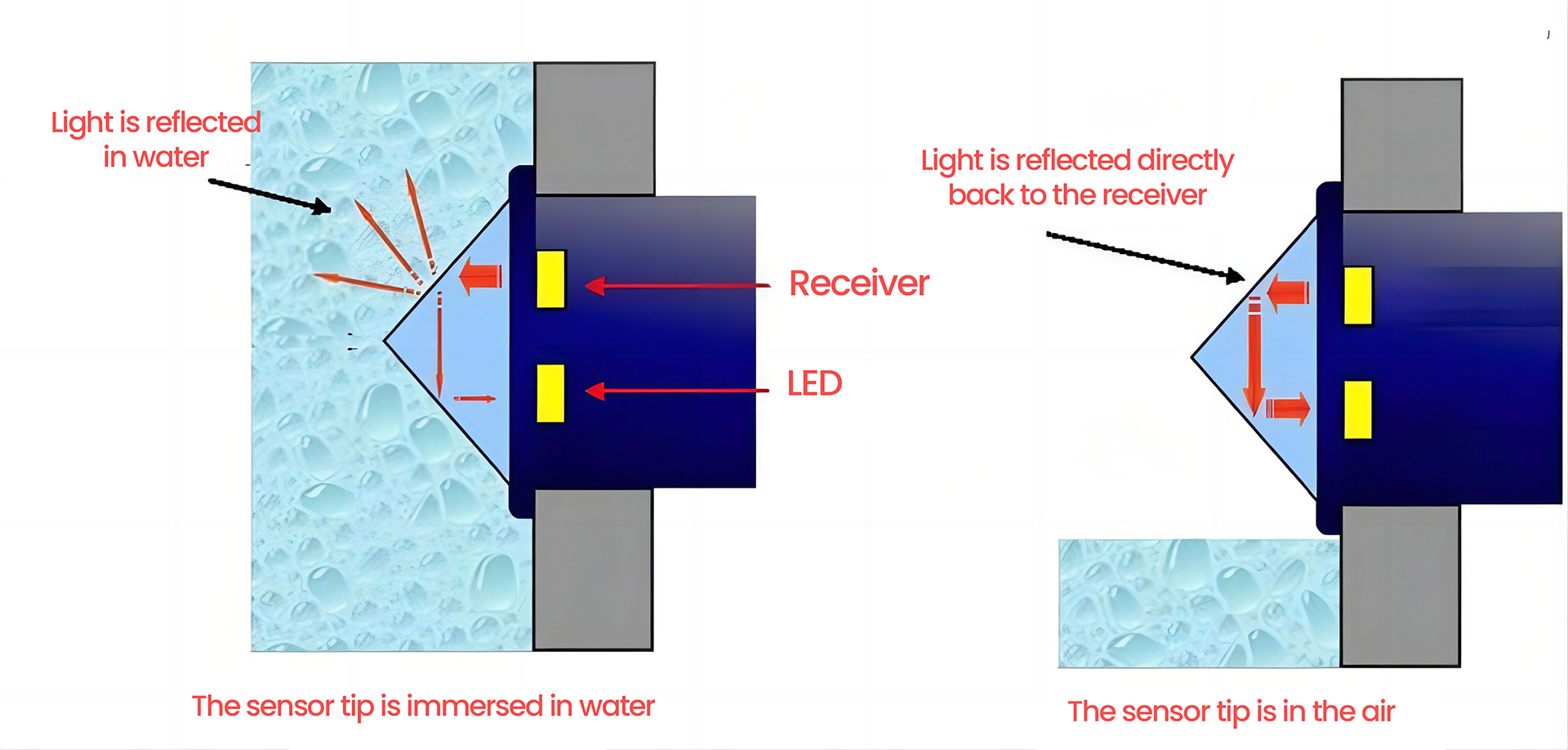
The working principle of the photoelectric liquid level switch is that the product contains a near-infrared light-emitting diode and a photosensitive receiver. Light from the LED is directed into a lens on top of the sensor. When the liquid immerses the lens of the photoelectric liquid level switch, the light is refracted into the liquid, so that the receiver cannot receive or can only receive a small amount of light. By sensing this change in operating conditions, the photoelectric liquid level switch allows the receiver to drive the internal electrical switch to activate an external alarm or control circuit. If there is no liquid, the light from the LED is reflected directly from the lens back to the receiver.
The working principle of the photoelectric liquid level switch is that the product contains a near-infrared light-emitting diode and a photosensitive receiver. Light from the LED is directed into a lens on top of the sensor. When the liquid immerses the lens of the photoelectric liquid level switch, the light is refracted into the liquid, so that the receiver cannot receive or can only receive a small amount of light. By sensing this change in operating conditions, the photoelectric liquid level switch allows the receiver to drive the internal electrical switch to activate an external alarm or control circuit. If there is no liquid, the light from the LED is reflected directly from the lens back to the receiver.
Job features:
The photoelectric liquid level sensor uses the principle of reflection and refraction of light at the interface of two different media. It is a new type of contact point liquid level measurement and control device. The photoelectric liquid level sensor has many advantages such as simple structure, high positioning accuracy, no mechanical parts, no need for debugging, high sensitivity, corrosion resistance, low power consumption, small size, etc. It also has high temperature resistance, high pressure resistance, strong corrosion resistance, and chemical properties. It is stable and has little impact on the measured medium.
The photoelectric liquid level sensor uses the principle of reflection and refraction of light at the interface of two different media. It is a new type of contact point liquid level measurement and control device. The photoelectric liquid level sensor has many advantages such as simple structure, high positioning accuracy, no mechanical parts, no need for debugging, high sensitivity, corrosion resistance, low power consumption, small size, etc. It also has high temperature resistance, high pressure resistance, strong corrosion resistance, and chemical properties. It is stable and has little impact on the measured medium.

The photoelectric liquid level sensor has nothing to do with other characteristics of the medium, including temperature, pressure, density, and electrical parameters. Therefore, the liquid level detection is accurate, the repeatability is high, the response speed is fast, and the liquid level control is very precise. The photoelectric probe is relatively small in size, and multiple photoelectric probes can be installed on a measuring body to make a multi-point liquid level sensor or transmitter. All components inside the photoelectric liquid level sensor are resin-sealed. There are no mechanical moving parts inside the sensor. Therefore, the sensor has high reliability, long life and is maintenance-free. The sensor can also be installed without debugging or calibration. Can be applied.

Photoelectric liquid level sensors can be used for accurate and reliable measurement and monitoring of key points, upper and lower limit points or multi-point liquid levels of various low-viscosity clean liquids, display alarms, fixed-point control and identification of gas/liquid two-phase interfaces or oil-water interfaces. Photoelectric liquid level sensors can be widely used in various liquid storage tanks and tanks during the production, storage and transportation of chemical, petrochemical, chemical fiber, fertilizer, food, medicine, transportation and military industries.
What is the difference between photoelectric liquid level sensor and capacitive liquid level sensor in liquid level measurement?
SOME HOT TOPICS ABOUT POTENTIOMETER
Related Article
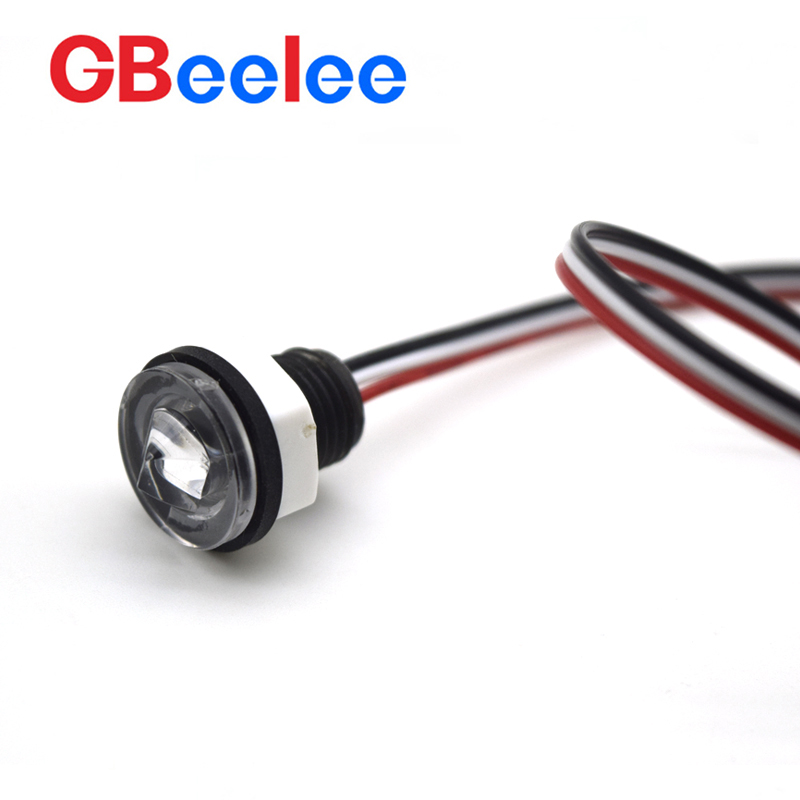
Safety and efficiency of photoelectric liquid level switches in liquid level monitoring applications in the home appliance industry

Gas is an important substance for human survival, and it is also a raw material and product in many industrial productions. As long as there is a detection box control requirement for the temperature, humidity, pressure, flow, and concentration of the gas, the relevant equipment and systems need to be equipped with corresponding gas sensors.
What is Gas Sensor
As a basic and key sensing technology, reed switches will play an increasingly important role in the future intelligent era. From homes to industries, from medical care to transportation, the application of magnetic reed switches will run through various fields, promoting technological innovation and social progress.
Reed switch: the source of perception leading the intelligent era