Safety and efficiency of photoelectric liquid level switches in liquid level monitoring applications in the home appliance industry
author: GBeelee
2024-04-10
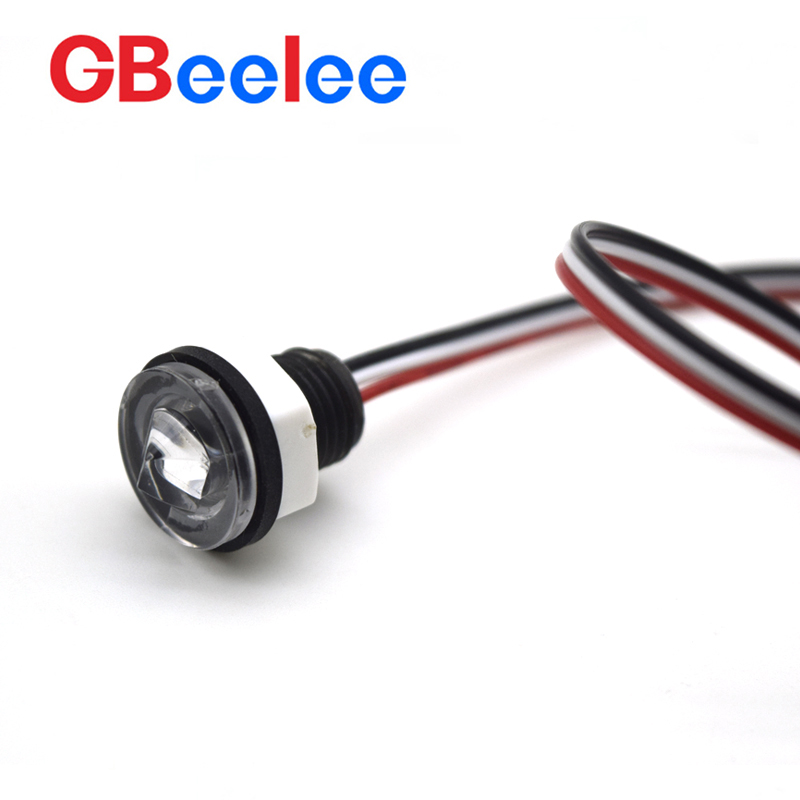
With the continuous advancement of the Internet of Things and intelligence, the home appliance industry has an increasing demand for liquid level detection, the application scenarios are becoming more and more abundant, and the requirements are getting higher and higher.Therefore, improving the safety and efficiency of household appliances is becoming increasingly important.Therefore, it is increasingly important to improve the safety and efficiency of household appliances.
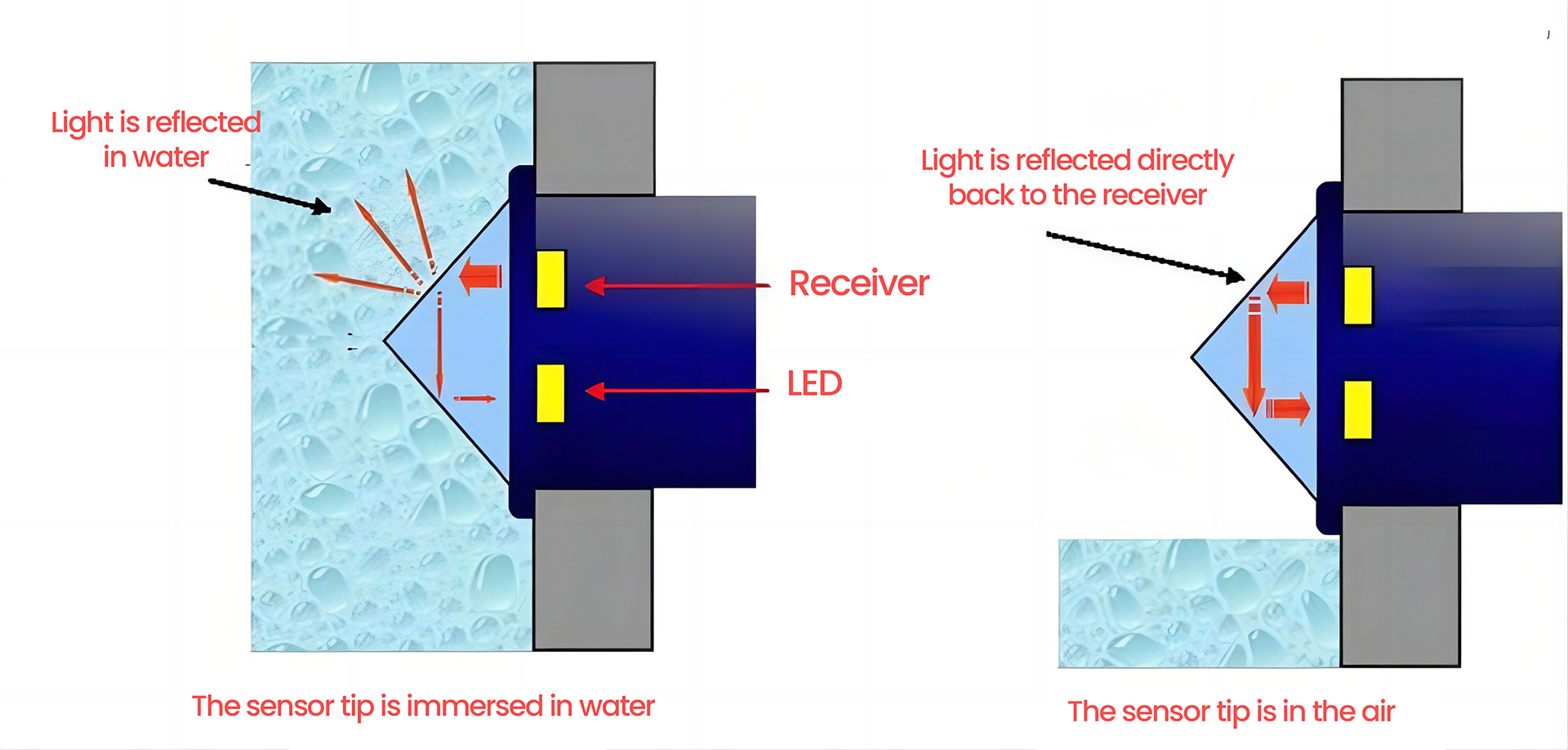
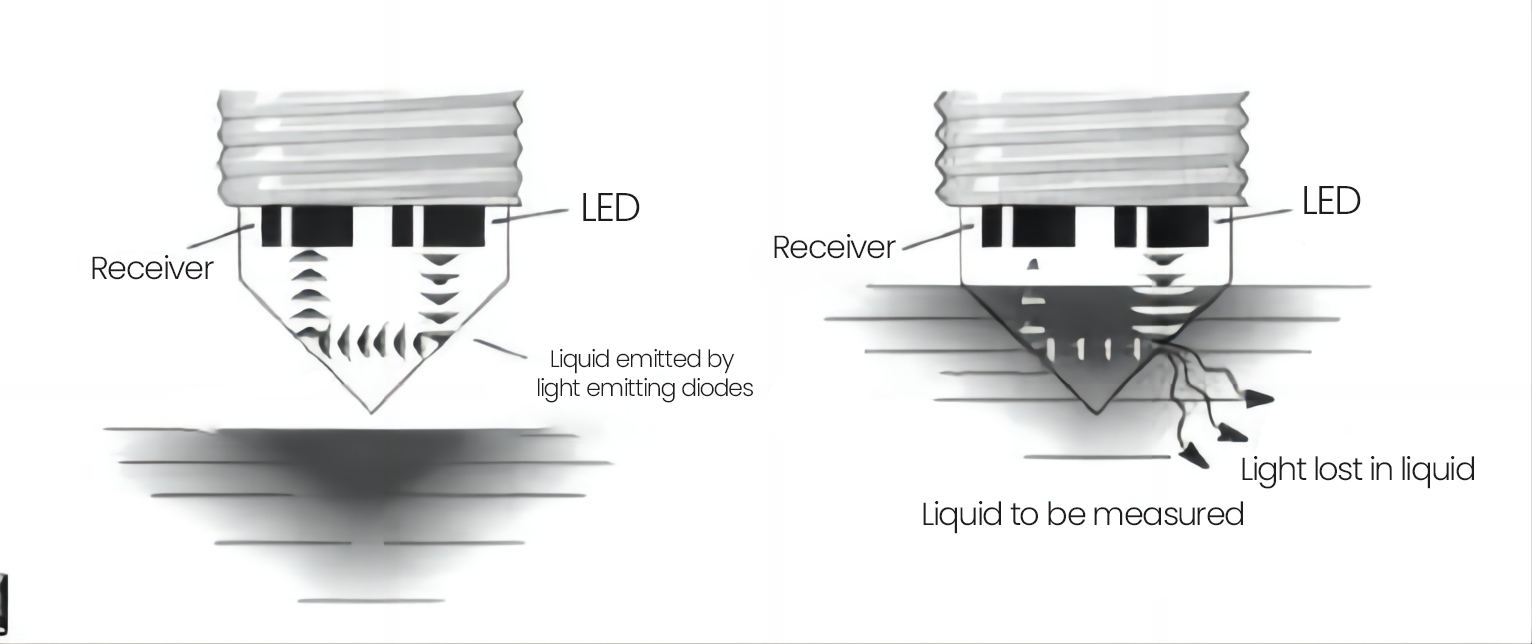
The working principle of the photoelectric liquid level switch is that the photoelectric liquid level switch contains an infrared light-emitting diode and a photoelectric receiver. The light from the LED is directed into a prism on top of the sensor. If no liquid is detected, the light from the LED is reflected directly from the prism back to the receiver. When the liquid blocks the prism, the light is refracted into the liquid, causing the receiver to receive no or only a small amount of light. This working principle is used to sense this change. The receiver can drive the electrical switch of the internal photoelectric level switch to initiate external alarm or circuit control.
Therefore, the photoelectric liquid level switch is not a sensor that detects the high and low position of the liquid, but a switch that detects whether there is liquid at a certain detection point. Photoelectric liquid level switches can replace manual detection of liquid levels in containers. Currently, photoelectric liquid level switches have been widely used in home appliances, chemicals, automobiles, medical and other industries.

In the dynamic landscape of home appliance technology, safety and efficiency are paramount considerations. From washing machines to coffee makers, manufacturers continually strive to integrate innovations that not only streamline tasks but also enhance user experience and safety. Amidst this pursuit, one often overlooked yet crucial component is the photoelectric liquid level switch.
These unassuming devices play a pivotal role in ensuring the smooth operation and safety of various home appliances by precisely monitoring liquid levels. Unlike traditional mechanical float switches, which are prone to wear and tear, photoelectric liquid level switches offer a more reliable and accurate solution.
At the heart of their functionality lies a simple yet ingenious principle: light transmission. These switches typically comprise a light source and a photodetector positioned opposite each other across the container holding the liquid. When the liquid level reaches the predetermined threshold, it interrupts the light beam, triggering the switch to either activate or deactivate the appliance accordingly.
One of the primary advantages of photoelectric liquid level switches is their versatility. They can be seamlessly integrated into a wide array of home appliances, ranging from dishwashers and refrigerators to humidifiers and water heaters. Their adaptability makes them indispensable in modern households, where convenience and efficiency are highly valued.
Photoelectric liquid level sensors, generally used in the home appliance industry, have higher liquid level measurement accuracy than float-type liquid level switches and capacitive liquid level switches, as well as high reliability and long life. As a new type of contact liquid level measurement and control device, the photoelectric liquid level switch is used. The photoelectric liquid level switch has many advantages such as simple structure, high positioning accuracy, no mechanical parts, no need for debugging, high sensitivity, corrosion resistance, low power consumption, small size, etc. It also has high temperature resistance, high pressure resistance, strong corrosion resistance, and chemical properties. It is stable and has little impact on the measured medium.
Safety is another critical aspect addressed by these switches. By precisely monitoring liquid levels, they help prevent overflows and leaks, mitigating the risk of damage to both the appliance and the surrounding environment. This not only safeguards valuable assets but also minimizes potential hazards, such as water damage and electrical malfunctions.
Moreover, the efficiency gains facilitated by photoelectric liquid level switches cannot be overstated. By accurately controlling the liquid level, these switches optimize resource utilization, leading to reduced energy consumption and lower operational costs over time. This aligns with broader sustainability goals and reflects a commitment to eco-friendly practices in appliance manufacturing.
In the context of the home appliance industry, where innovation is constant, photoelectric liquid level switches represent a subtle yet significant advancement. Their ability to enhance safety, efficiency, and versatility underscores their importance in shaping the next generation of household appliances. As consumers increasingly prioritize convenience and sustainability, manufacturers must continue harnessing such technologies to deliver products that exceed expectations.
In conclusion, the application of photoelectric liquid level switches in the home appliance industry exemplifies innovation driven by practicality and necessity. By providing precise liquid level monitoring, these switches contribute to safer, more efficient, and environmentally conscious appliances. As technology evolves, their role is set to become even more pronounced, reinforcing their status as indispensable components in the modern home.
What is Gas Sensor
Related Article

Gas is an important substance for human survival, and it is also a raw material and product in many industrial productions. As long as there is a detection box control requirement for the temperature, humidity, pressure, flow, and concentration of the gas, the relevant equipment and systems need to be equipped with corresponding gas sensors.
What is Gas Sensor
As a basic and key sensing technology, reed switches will play an increasingly important role in the future intelligent era. From homes to industries, from medical care to transportation, the application of magnetic reed switches will run through various fields, promoting technological innovation and social progress.
Reed switch: the source of perception leading the intelligent era