What is Gas Sensor
author: GBeelee
2024-03-18
一、Introduction
With the development of intelligence and informatization, various fields such as industrial transformation, environmental testing, air quality improvement, smart home, and medical device development have continued to upgrade, which has further improved the efficiency of gas sensor detection technology.
Gas sensor detection technology is a technology used to detect various gases in the environment. It can usually detect toxic and harmful gases, organic volatile gases, oxygen, etc. in the air. With the development of society and the advancement of science and technology, gas detection Technology is also constantly improving and attracting attention from all parties. It plays an important role in environmental protection, industrial safety, medical care and other fields.
- In terms of environmental protection, it can detect the concentration of toxic and harmful gases in the air, thereby effectively controlling the emission of pollution sources and preventing environmental pollution.
- In terms of industrial safety, it can detect the concentration of toxic and harmful gases in the air, as well as the concentration of flammable gases, thereby ensuring the safety of industrial production.
- In healthcare, it can detect the concentration of oxygen and organic volatile gases to effectively diagnose and treat diseases.
As governments and enterprises of all parties continue to increase their investment in gas detection technology, the development prospects of gas detection technology will also be broader. In the future, it will continue to play an important role in environmental protection, industrial safety, medical care and other fields. At the same time, it will also expand to more fields, such as agriculture, food processing, etc.
A gas sensor is a device that converts gas composition, concentration and other information into information that can be used by personnel, instruments, computers, etc. It is usually installed in the monitoring system within the detection head of the monitoring system and is used to collect gas data on site. The gas signal is converted into an electrical signal through the gas sensor, and then transmitted to the computer for data processing through serial communication. The gas sensor is the core of the gas detection system and plays a decisive role in the gas detection system.
Currently used gas sensors are mainly based on chemical, semiconductor, infrared, electrochemical, optical, catalytic, sound and other technology types. Among them, electrochemical and semiconductor gas sensors were developed earlier, with high technological maturity and high market acceptance; while gas sensors using optical principles such as infrared and light scattering appeared and were applied later, are more difficult, and are more expensive. , causing the market acceptance to be far lower than that of highly mature gas sensors.

二、Gas Sensor Types
2.1 Different types of detection gases:
- Combustible gases (including methane, propane, ethane, etc.);
- Toxic and harmful gases (including carbon monoxide, carbon dioxide, ammonia, hydrogen sulfide, etc.);
- Oxygen, volatile organic compounds (including benzene, toluene, ethyl acetate, etc.);
- Gas mixtures (such as carbon monoxide and nitrogen oxides in car exhaust);
- Specific gases (such as chlorine, fluorine, hydrogen, etc.);
2.2 Different types of applications:
- Portable (often carried by personnel from site to site);
- Fixed (commonly used for long-term monitoring and implementation monitoring);
- Online (can transmit monitoring data to the cloud system in real time);
- Wearable (wearable on an individual to detect the gas environment around the individual);
- Network transmission type (a network composed of a group of sensors that can monitor and analyze the gas concentration in a specific area);
- Intelligent type (this type of sensor integrates advanced data processing and analysis functions and is usually used in advanced monitoring systems or automated control systems);
2.3 Different types of sampling methods (sampling method refers to how the gas sample to be detected is introduced into the sensor for detection):
- Active sampling (active extraction through fans or pumps, usually used for long-distance transmission or when gas dilution is large);
- Passive sampling (no external device required, direct exposure to the gas environment to be detected, suitable for air quality monitoring, environmental monitoring, etc.);
- Diffusion sampling (introducing a gas sample through a diffusion machine, usually designed with a semi-enclosed structure);
- Flow sampling (gas samples are brought into the sensor through air flow or liquid flow, usually used for quantitative measurement of gas concentration, such as industrial process testing, indoor air quality monitoring, etc.);
- Local sampling (usually used to monitor local gas concentrations on industrial production lines), etc.;
2.4 Different types of functions:
- Single gas detection (used to detect a single type of gas, such as carbon monoxide, oxygen, and methane. This type of sensor usually has high sensitivity and selectivity);
- Multi-gas detection (can detect multiple different types of gases at the same time, suitable for environments that need to monitor multiple gases at the same time);
- Toxic gas detection (dedicated to detecting toxic gases in the environment, such as carbon monoxide, ammonia, hydrogen sulfide, etc.);
- Combustible gas detection (dedicated to detection environments of combustible gases (methane, propane, natural gas, etc.), such as fire prevention, industrial safety monitoring and other environments with potential fire hazards);
- Oxygen concentration detection (usually used in medical equipment, gas analysis instruments and other applications to ensure a safe range of oxygen concentration);
- Ambient air quality monitoring (dedicated to detecting the concentration of pollutants (such as sulfur dioxide, nitrogen oxides, particulate matter, etc.) in ambient air, usually used for urban environment monitoring, industrial emission monitoring, etc.);
2.5 Different types of principles:
- Chemical sensors (detect gas concentrations through chemical reactions);
- Infrared sensors (generally suitable for detecting organic and inorganic gases);
- Electrochemical sensors (such as Oxygen Sensor, PH sensor, Glucose Sensor, etc.);
- Semiconductor sensors (commonly used to detect flammable or toxic gases);
- Optical sensors (often used for high-precision gas measurement, such as industrial process control or environmental monitoring);
- Catalytic sensors (usually used to detect combustible gases, such as methane, propane, etc.);
三、How to correctly choose a gas sensor:
3.1. Clarify the application environment:
First, it is necessary to clarify the target gas type that needs to be monitored and the application environment for monitoring. Different gas sensors have different applicable environmental conditions and target gases;
3.2. Understand the environmental conditions:
Different environmental conditions, surrounding temperature, humidity, pressure and other factors are not the same. It is necessary to ensure that the selected gas sensor can operate stably in the target environment;
3.3. Measuring range:
Determine the range of gas concentration values that need to be measured, and ensure that the measurement range of the selected sensor can fully cover the concentration range in the actual application scenario;
3.4. Sensitivity and selectivity:
Consider the harshness of actual application scenarios and select sensors with corresponding sensitivity and selectivity to ensure accurate detection of target gases;
3.5. Response time:
In some application areas, fast response time may be critical and the sensor response time needs to be considered to ensure safe detection;
3.6. Stability and reliability:
Choose sensors with high stability and reliability to ensure long-term stable performance and accurate measurement results;
3.7. Adaptability:
Choose sensors with high stability and reliability to ensure long-term stable performance and accurate measurement results;
3.8. Cost-effectiveness:
Consider the adaptability and ease of use of the sensor, including convenience in installation, calibration, maintenance, etc. Choosing sensors that are easy to operate and maintain can reduce operating costs;
Safety and efficiency of photoelectric liquid level switches in liquid level monitoring applications in the home appliance industry
Reed switch: the source of perception leading the intelligent era
Related Article
What is the difference between photoelectric liquid level sensor and capacitive liquid level sensor in liquid level measurement?
What is the difference between photoelectric liquid level sensor and capacitive liquid level sensor in liquid level measurement?
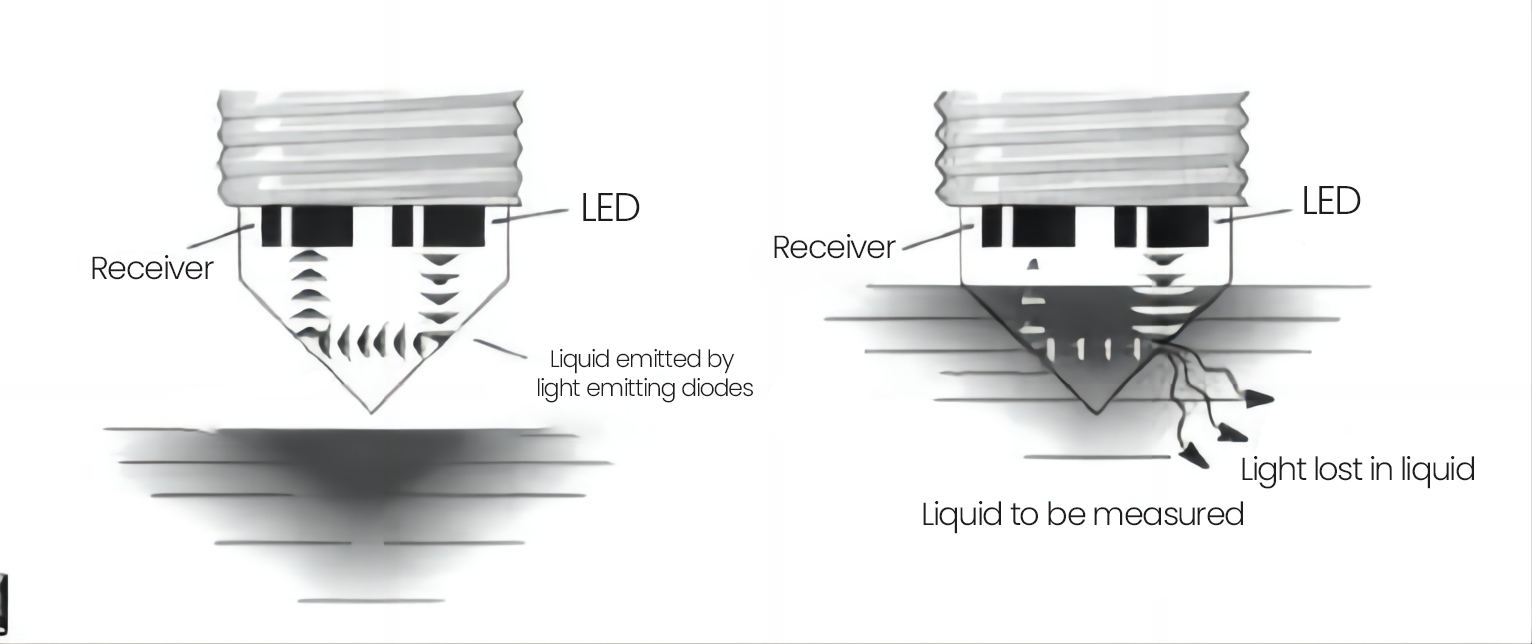
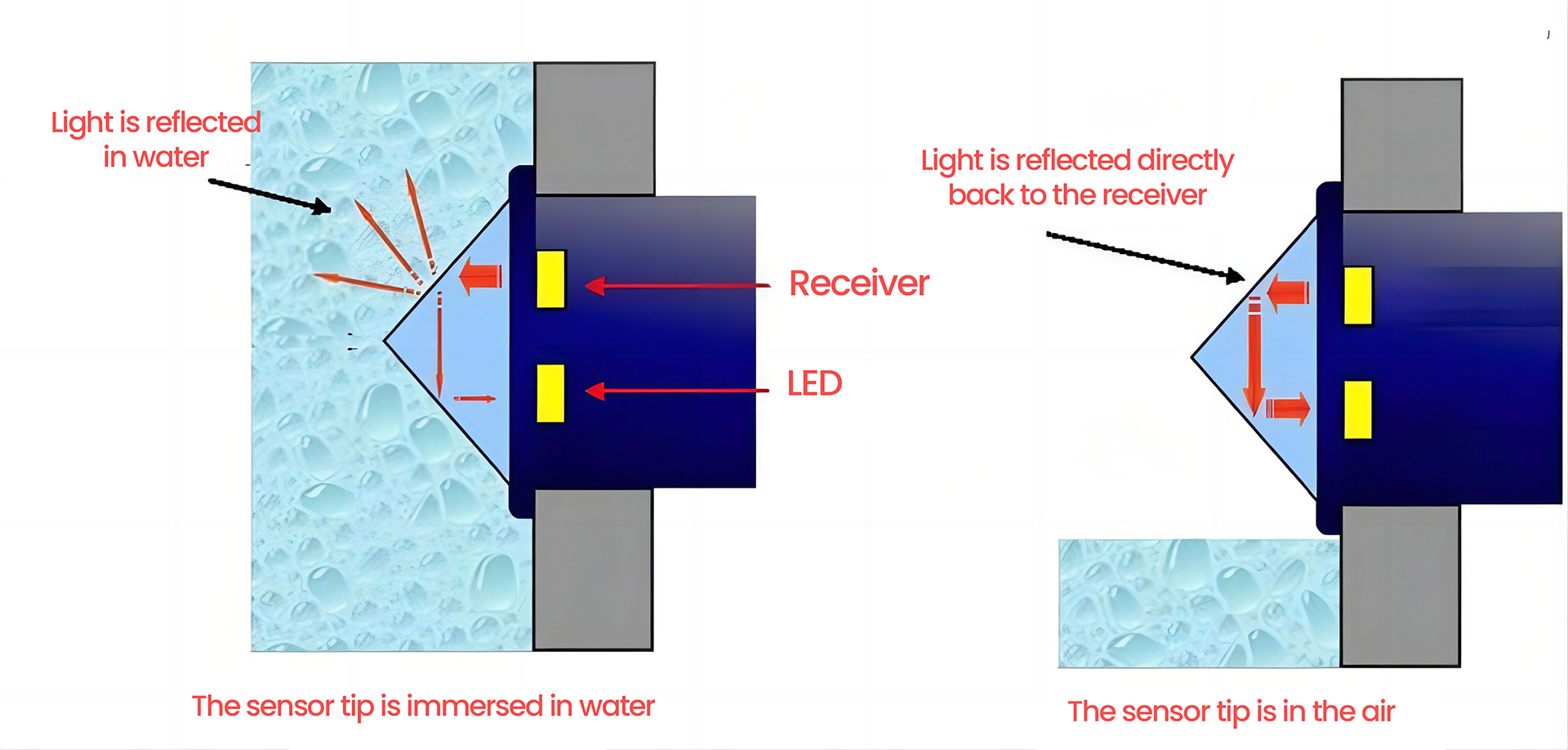
Working principle of photoelectric liquid level sensor
Working principle of photoelectric liquid level sensor

A potentiometer is a manually adjustable variable resistor with 3 terminals. Two of the terminals are connected to the opposite ends of a resistive element, and the third terminal connects to a sliding contact, called a wiper, moving over the resistive element.
SOME HOT TOPICS ABOUT POTENTIOMETER