What is the difference between photoelectric liquid level sensor and capacitive liquid level sensor in liquid level measurement?
author: GBeelee
2023-11-11
What electronic components can be used for water level detection and water level control in production and daily life? A water level sensor can be used for detection. There are several types of water level sensors, including photoelectric, separate, capacitive, weighing, etc. Each type has its own characteristics and advantages. So what I want to introduce today is the comparison between photoelectric liquid level sensor and capacitive liquid level sensor.
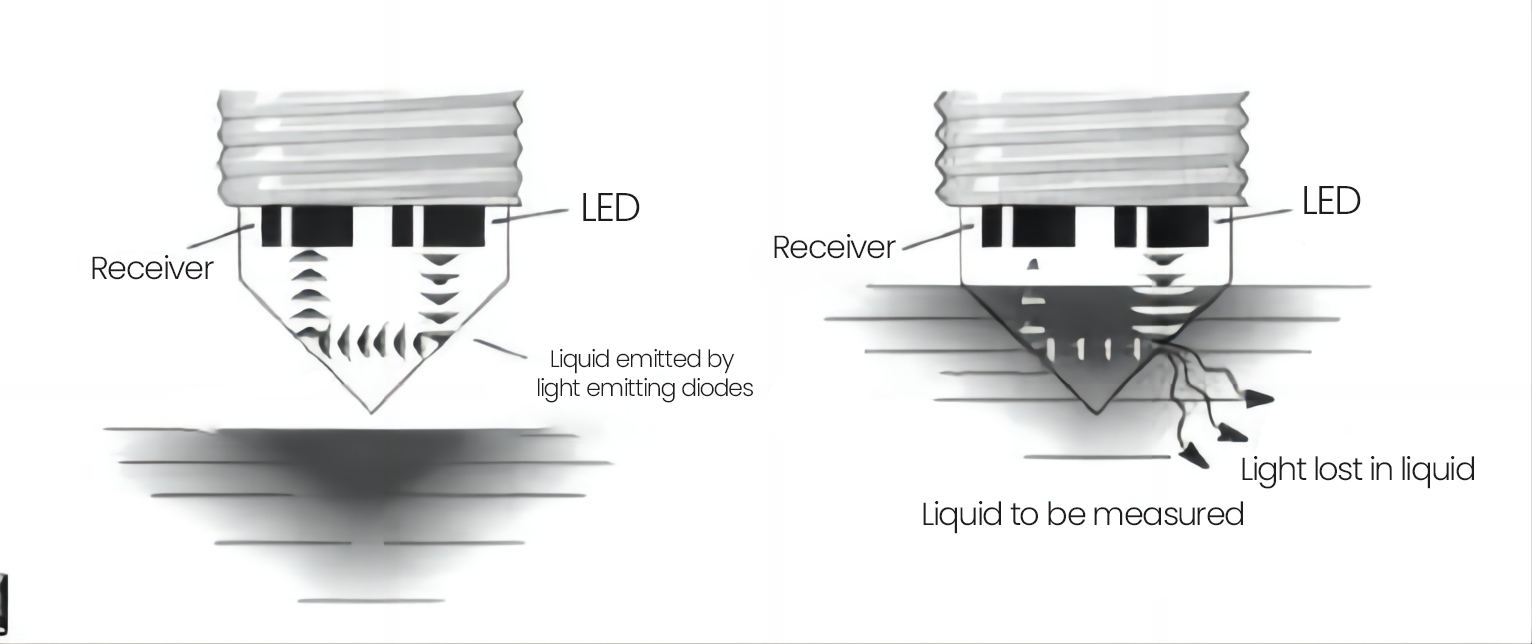
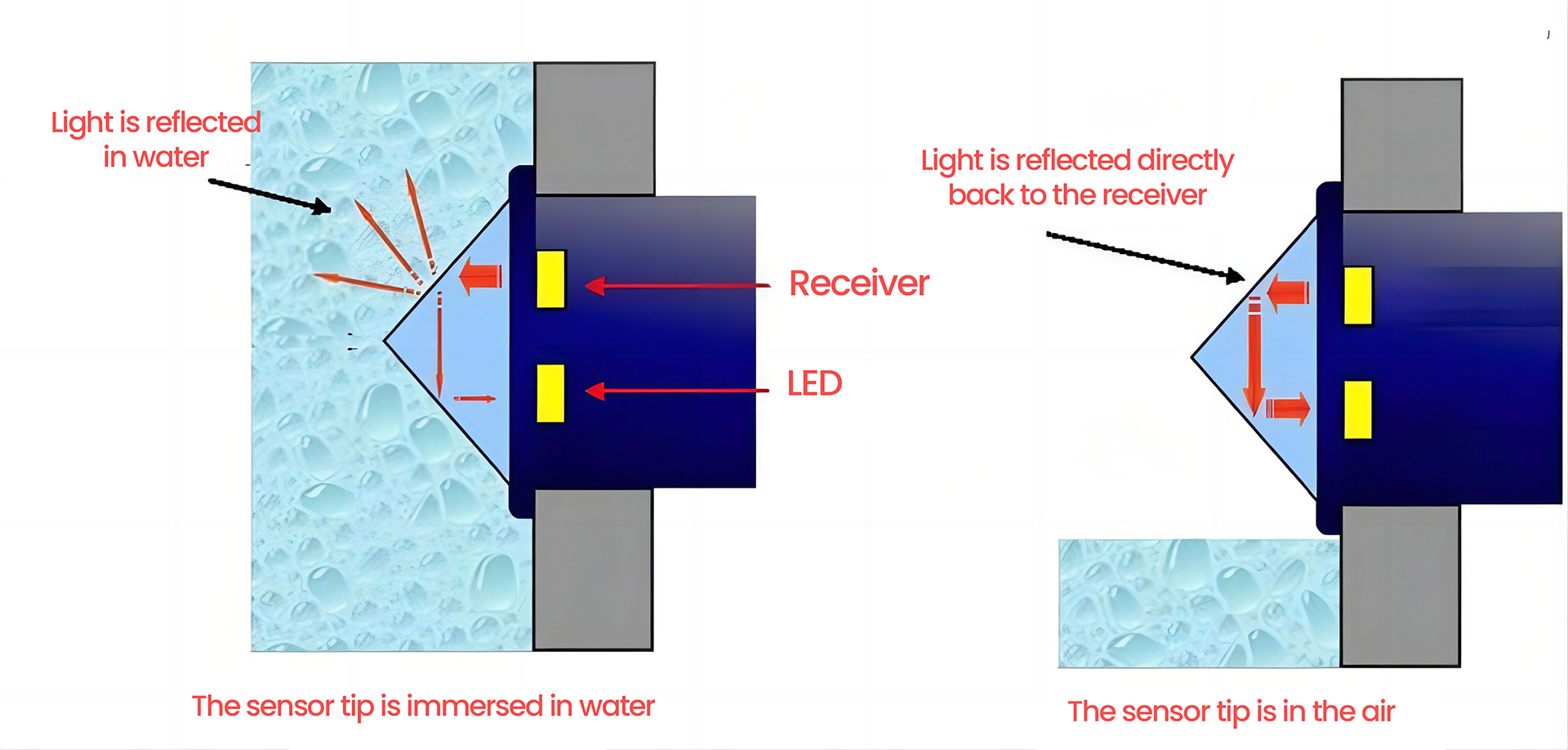
Working principle: The photoelectric liquid level sensor is a new contact point liquid level measurement and control device developed using the principle of reflection and refraction of light at the interface of two different media. The working principle is that the product contains a near-infrared light-emitting diode and a photosensitive receiver. Light from the LED is directed into a lens on top of the sensor. When the liquid immerses the lens of the photoelectric liquid level switch, the light is refracted into the liquid, so that the receiver cannot receive or can only receive a small amount of light. By sensing this change in operating conditions, the photoelectric liquid level switch allows the receiver to drive the internal electrical switch to activate an external alarm or control circuit. If there is no liquid, the light from the LED is reflected directly from the lens back to the receiver.

It can be seen from the working principle: Photoelectric liquid level sensors are used to detect liquids, including stable substances, the interface between two immiscible liquids and the occurrence of deposits. Their work is based on changes in the transmission of infrared light emitted by infrared LEDs. Using high-energy infrared diodes and pulse modulation methods, light interference can be reduced. Optoelectronic level sensors, on the other hand, use high-intensity lasers that can inject dusty environments and notice liquid substances.

pros and cons:
Compact, high pressure, no moving parts and temperature capable, can notice trace amounts of liquid. Since the sensor needs to be in contact with the liquid requiring electrical power, certain wide substances may cause coating on the prism.
Compact, high pressure, no moving parts and temperature capable, can notice trace amounts of liquid. Since the sensor needs to be in contact with the liquid requiring electrical power, certain wide substances may cause coating on the prism.
Next let's take a look at the capacitive liquid level sensor.
The capacitive liquid level sensor is a variable dielectric capacitor that uses changes in the measured medium surface to cause changes in capacitance. Used to detect changes in liquid level like mud and aqueous solutions. The sensor detects changes in liquid level by using a probe made of polytetrafluoroethylene insulated wire. The change in liquid level causes a change in capacitance. According to the detected capacitance value The size is used to determine whether the location of the sensor is in a water state or a water-free state. However, stainless steel probes are extremely responsive and therefore suitable for measuring particles of non-conductive matter or materials with low dielectric constants. These types of sensors are very easy to use and clean because they don't have any moving parts.
The capacitive liquid level sensor is a variable dielectric capacitor that uses changes in the measured medium surface to cause changes in capacitance. Used to detect changes in liquid level like mud and aqueous solutions. The sensor detects changes in liquid level by using a probe made of polytetrafluoroethylene insulated wire. The change in liquid level causes a change in capacitance. According to the detected capacitance value The size is used to determine whether the location of the sensor is in a water state or a water-free state. However, stainless steel probes are extremely responsive and therefore suitable for measuring particles of non-conductive matter or materials with low dielectric constants. These types of sensors are very easy to use and clean because they don't have any moving parts.

pros and cons:
One of the biggest features of the capacitive type is that it can detect changes in water level without touching the liquid. Therefore, when the container does not need to be opened and there is dirt, impurities, and sediment inside, it will not affect the test results.
One of the biggest features of the capacitive type is that it can detect changes in water level without touching the liquid. Therefore, when the container does not need to be opened and there is dirt, impurities, and sediment inside, it will not affect the test results.
So what are the advantages of "photoelectric liquid level sensor" compared to "capacitive liquid level sensor"?
- The photoelectric liquid level sensor uses optical methods to detect the presence of liquid level, so the purity, concentration, and sedimentation of dirt after long-term use of the liquid will not affect it.The capacitive liquid level sensor uses the difference in capacitance caused by the change in water level to determine the level of the water level. Therefore, there will be different resistance changes for different water qualities. Differences in water quality will directly affect its accuracy, and some liquids cannot be detected.
- There should be no metal around the capacitive liquid level sensor, while the photoelectric liquid level sensor will not be affected.
- The accuracy of the photoelectric liquid level sensor on the water surface is: ±0.5 MM
- The water surface accuracy of the capacitive liquid level sensor is: ±1.5 MM
- The photoelectric liquid level sensor also has great advantages in the installation structure of the machine water tank, and can be installed in any direction. Capacitive liquid level sensors have many limitations in comparison.
Reed switch: the source of perception leading the intelligent era
Working principle of photoelectric liquid level sensor
Related Article
Safety and efficiency of photoelectric liquid level switches in liquid level monitoring applications in the home appliance industry

Gas is an important substance for human survival, and it is also a raw material and product in many industrial productions. As long as there is a detection box control requirement for the temperature, humidity, pressure, flow, and concentration of the gas, the relevant equipment and systems need to be equipped with corresponding gas sensors.
What is Gas Sensor
As a basic and key sensing technology, reed switches will play an increasingly important role in the future intelligent era. From homes to industries, from medical care to transportation, the application of magnetic reed switches will run through various fields, promoting technological innovation and social progress.
Reed switch: the source of perception leading the intelligent era