
Buzzer Working Principle: Understanding the Basics
author: GBeeLee
2023-03-22
Buzzer is a simple and commonly used electronic component that generates a buzzing or beeping sound. In this article, we will explore the working principle of a buzzer and its application in different electronic devices.
Buzzer Basics
A buzzer is a type of transducer that converts electrical energy into sound waves. It consists of a coil of wire, a magnet, and a diaphragm or a plate. When an electrical signal is applied to the coil, it creates a magnetic field that attracts or repels the magnet, causing the diaphragm to vibrate and produce sound waves.
Working Principle
The working principle of a buzzer is based on the concept of electromagnetic induction. When an AC signal or a pulse of DC voltage is applied to the coil, it creates an alternating magnetic field that causes the diaphragm to vibrate at a specific frequency, producing sound waves.
There are two types of buzzers: active and passive. An active buzzer generates sound on its own and requires only a DC voltage source to operate. A passive buzzer, on the other hand, requires an external signal, such as an oscillator or a microcontroller, to generate sound.
Applications
Buzzers are commonly used in various electronic devices, such as alarms, timers, doorbells, and game consoles, to provide an audible signal or alert. They are also used in automotive and industrial applications to indicate the status of a system or a process.
Conclusion
Buzzers are simple and reliable components that generate sound waves by converting electrical energy into mechanical energy. Their ease of use and low cost make them an essential component in many electronic devices. By understanding the working principle of buzzers, we can better understand their application in different circuits and systems.

The use of buzzers in European and American countries
Potentiometer Working Principle: Understanding the Basics
Related Article
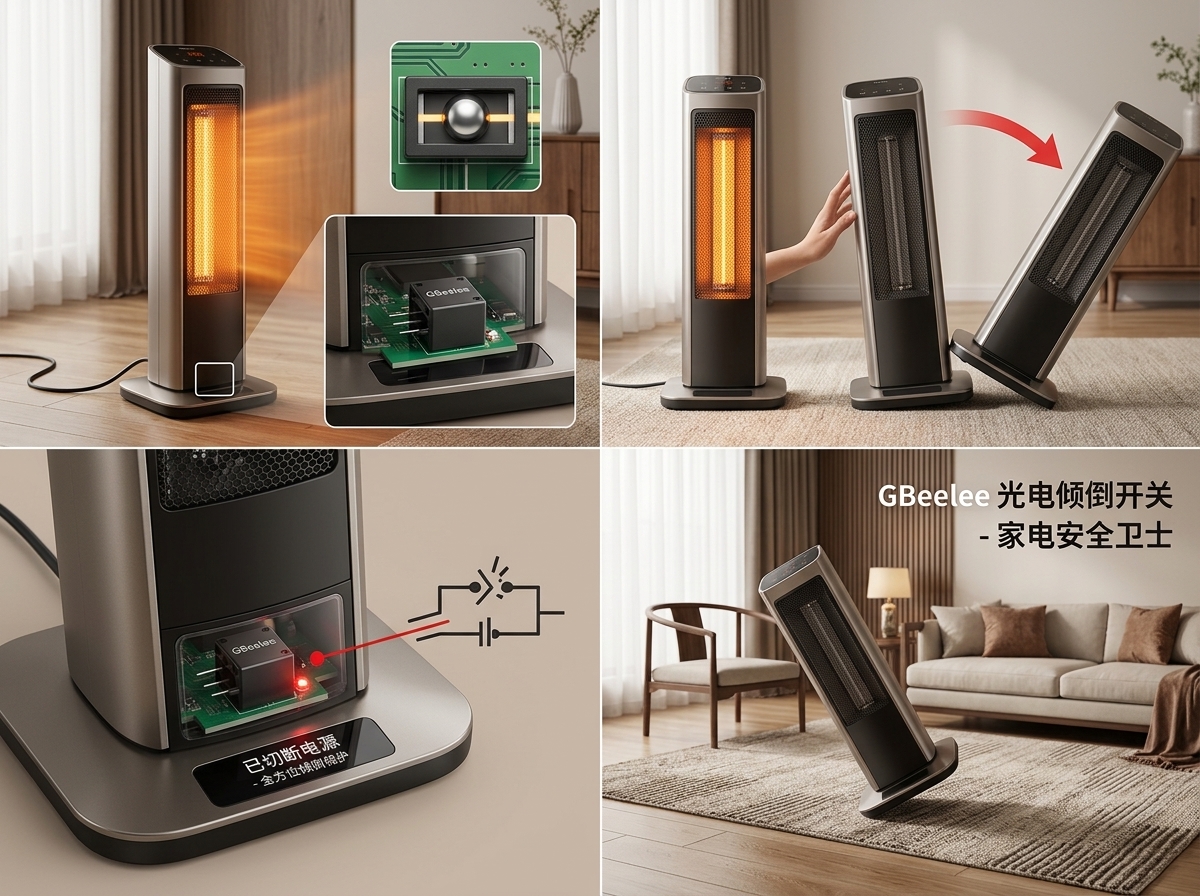
How to Select Safety Tilt Switches for Smart Home Appliances? An Analysis of Tilt Detection Accuracy and NO/NC Output
Safety and efficiency of photoelectric liquid level switches in liquid level monitoring applications in the home appliance industry

Gas is an important substance for human survival, and it is also a raw material and product in many industrial productions. As long as there is a detection box control requirement for the temperature, humidity, pressure, flow, and concentration of the gas, the relevant equipment and systems need to be equipped with corresponding gas sensors.
What is Gas Sensor
As a basic and key sensing technology, reed switches will play an increasingly important role in the future intelligent era. From homes to industries, from medical care to transportation, the application of magnetic reed switches will run through various fields, promoting technological innovation and social progress.
Reed switch: the source of perception leading the intelligent era